Climbing Ben Nevis: A Family Story of Anxiety, Purpose and Becoming
Climbing Ben Nevis with my two children turned out to be far more than a physical challenge. Although we walked the same path, each of us travelled a very different psychological journey. In the days leading up to the climb, my husband - who had completed Ben Nevis several times years ago - became increasingly anxious. He followed weather updates obsessively, shared warnings about treacherous conditions, and tried to prepare us for every possible danger. His fear came from love, but it was absorbed intensely by our daughter, who internalised every caution and every “what if.” My son, meanwhile, was focused entirely on reaching the summit. He was completing his three‑peak challenge and carrying his grandmother’s ashes, determined to scatter them at the top. His determination meant he struggled to consider any discussion about risk.
I found myself somewhere in the middle. I wanted to honour the moment, knowing this might be the only chance we had to climb together and say goodbye. But I also questioned whether I was being foolhardy. As we began the ascent, I imagined long conversations with my children. Instead, we were all quietly intrepid, aware that the glorious weather at the bottom would not last. Halfway up, fog and cloud obscured our view, and soon we were walking through deep snow. We met people returning from the summit describing snow up to their thighs, yet I felt reassured when a group in their seventies continued confidently ahead.
As visibility reduced further, my daughter reached a point where she believed we were going to die on the mountain. The reassurance of being surrounded by other walkers evaporated, and suddenly we felt alone on the side of Ben Nevis. My son was devastated - his GPS showed we were only 200 metres from the summit. He was desperate to succeed, carrying his grandmother’s ashes and a photo of his grandparents standing proudly at the top decades earlier. This moment captured how differently anxiety can manifest: my husband’s fear had travelled through the family, my daughter had absorbed it, my son’s determination had shielded him from it, and I was balancing purpose, grief, responsibility, and uncertainty all at once. It was a vivid example of how anxiety is shaped by meaning rather than the situation itself.
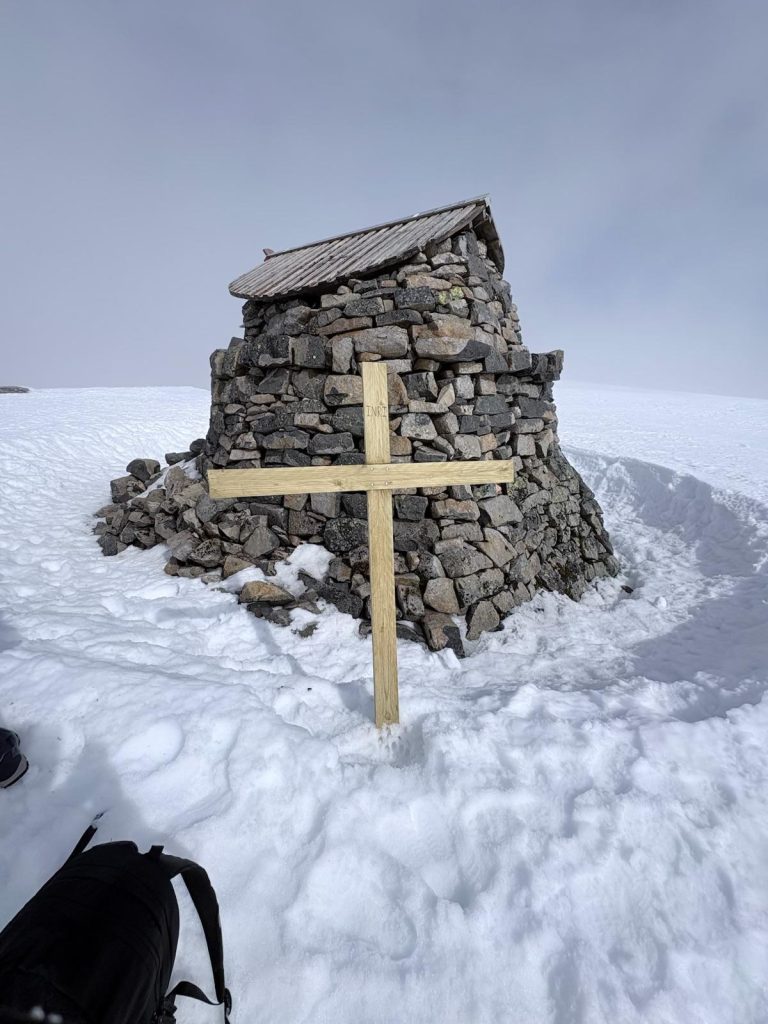
Then, in a moment that felt symbolic, the fog cleared. The path was still there. We were still heading in the right direction. My son took his sister’s hand, and together we continued. By now the snow was seven feet deep, but it was the softest, loveliest snow I have ever walked on. Visibility came and went, but we had learned to pause and wait - the path always revealed itself again. Guided by cairns, we reached the summit. Although many people were climbing that day, we found ourselves alone at the top, able to share a private moment of goodbye as my son scattered the ashes.
The descent was filled with chatter, laughter, and breathtaking views as the fog cleared. We talked about anxiety and how differently we had each experienced it. My husband had imagined the worst because everything he loved was on the mountain without him. My daughter had absorbed his fear so deeply that she felt certain she would die. My son’s determination had protected him from anxiety but made it hard for him to consider risk. I had been holding all of it - purpose, grief, fear, responsibility - while trying to keep us moving forward.
In Occupational Therapy, we often speak about Doing, Being, and Becoming. This climb embodied all three. The Doing was the physical challenge - the snow, the fog, the effort, the uncertainty. The Being was the quiet, meaningful moment at the summit as we said goodbye. And the Becoming was who we were afterwards: a family that faced grief, fear, and extreme stress together and emerged changed. By reaching the top, we didn’t just complete a trek; we became a family that moved from “we can’t” to “we did.” This shift is the essence of self‑efficacy, the belief in one’s ability to succeed in future challenges.
Experiences like this reinforce my belief in how important it is to face our difficulties in daily life. When the path becomes unclear, sometimes pausing allows the fog to lift and our focus to sharpen. What once felt impossible can suddenly feel achievable. And often, the journey changes us more than the destination.
If you are struggling in daily life, Occupational Therapy can support you to find a path forward - one that feels meaningful, manageable, and uniquely yours. OT helps people explore their purpose, understand their barriers, and build confidence through small, achievable steps. Just as we did on the mountain, you can move from “I can’t” to “I can.”